Rubber Check Valve
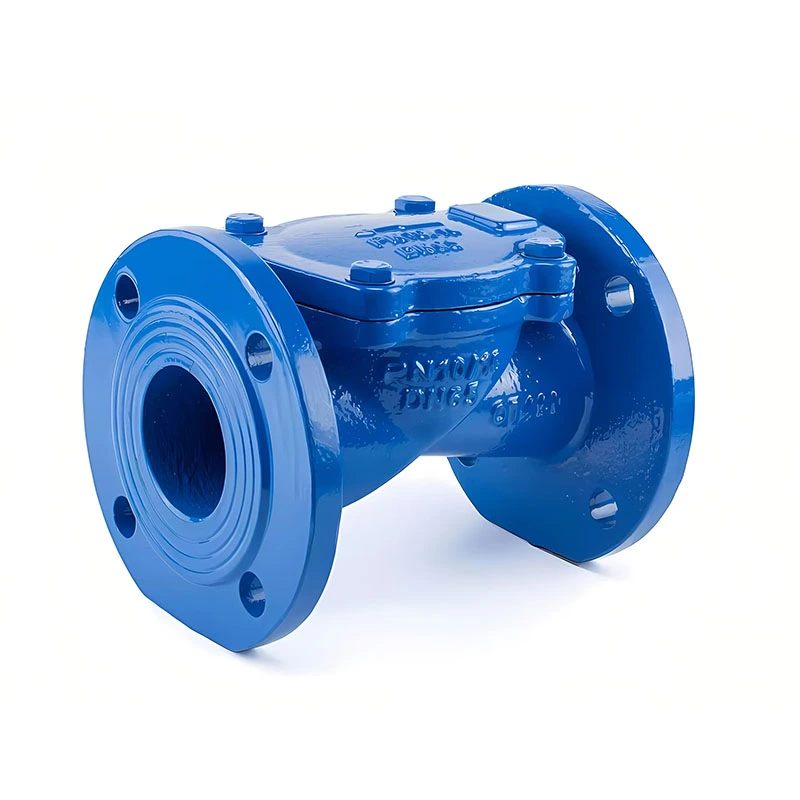
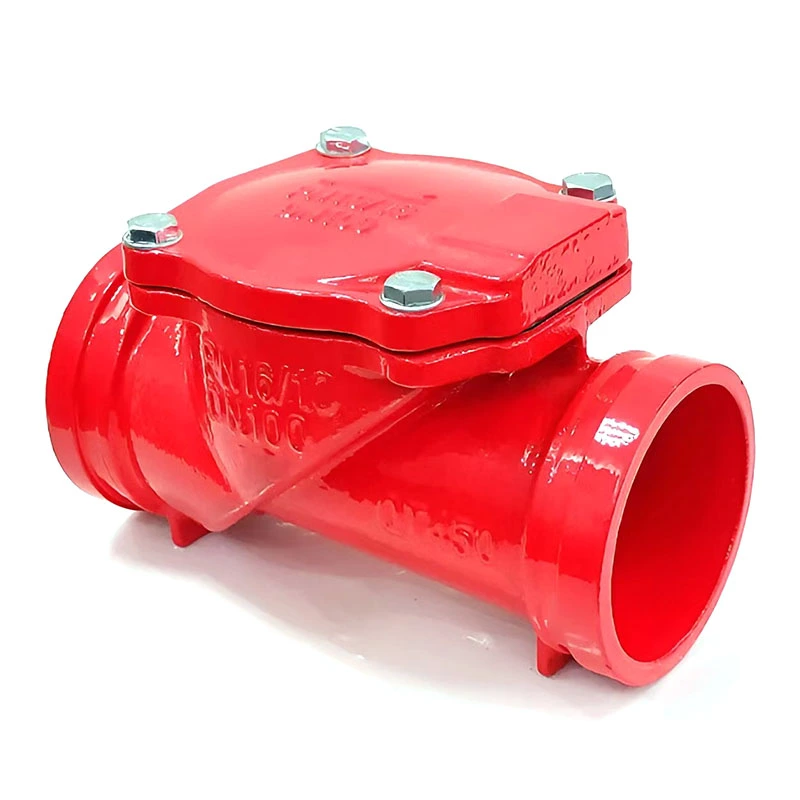
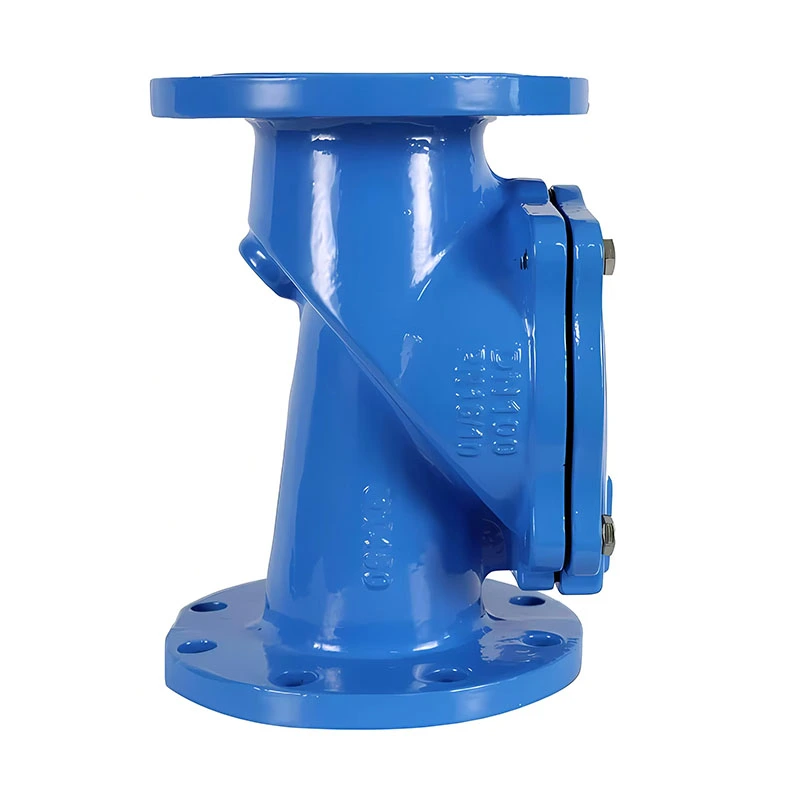
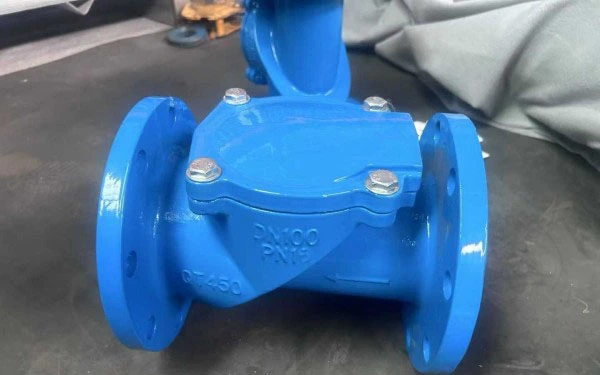
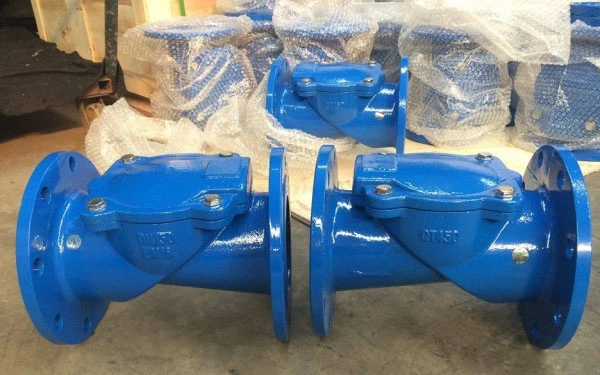
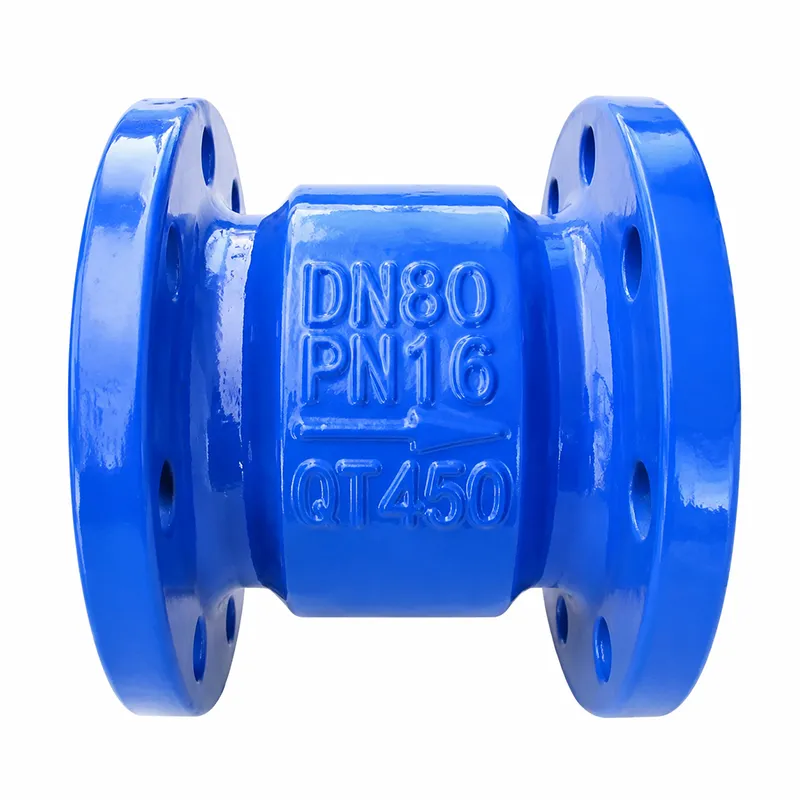
FUXEON® offers the Discount Rubber Check Valve, which is specifically designed for use in water supply networks and pumping stations, is an important device to ensure the stable operation of fluid systems.As a fully enclosed double-flange check valve, I can effectively prevent medium backflow, whether it is clean water transfer or sewage treatment scenarios, can be excellent, for all types of fluid engineering to provide reliable protection.
Both new and existing customers can purchase Rubber Check Valves from FUXEON®'s factory. These valves are made of high-quality steel plates, steel rods and reinforced nylon fabric composite materials, and are covered with a durable rubber layer on the outside. This high-strength material combination gives me super durability. The valve disc can be recycled up to 1 million times, which can handle frequent fluid on-off demand for a long time.
At the same time, our 45-degree inclined seat design is extremely advantageous, which can achieve rapid closure, effectively reduce water hammer phenomenon and pipeline shock, greatly reducing the risk of loss and failure in system operation.Moreover, we do not have to worry about follow-up maintenance problems, just remove the valve cover, I can easily carry out maintenance, save time and effort.
Parameters:
|
DN |
L |
D |
D1 |
n- d |
|
2″ |
50 |
203 |
165 |
125 |
|
2-1/2″ |
65 |
216 |
185 |
145 |
|
3″ |
80 |
241 |
200 |
160 |
|
4″ |
100 |
292 |
220 |
180 |
|
5″ |
125 |
292 |
250 |
210 |
|
6″ |
150 |
356 |
285 |
240 |
|
8″ |
200 |
495 |
340 |
295 |
|
10″ |
250 |
622 |
405 |
355 |
|
12″ |
300 |
698 |
460 |
410 |
|
Component |
Materia |
|
Body |
Ductile Iron |
|
Cone |
Ductile Iron |
|
Disc |
Steel + Nylon +EPDM Vulcanized |
|
Sealing Ring |
EPDM |
Features:
In terms of performance, our Rubber Check Valve has a unique full flow area design that minimizes medium flow resistance, making fluid delivery more efficient and energy efficient.Not only that, I also have a strong anti-scaling ability, even in the water quality complex environment, but also can reduce dirt adhesion, always maintain a good circulation state, reduce equipment failure and maintenance costs caused by scaling.
In terms of specification selection, we provide a wide range of size from DN50 to DN300, which can meet the installation requirements of different piping systems and provide more flexible choices for engineering projects.In the installation process, my operation is also very simple-the simplification of the manufacturing process makes the installation process easier, we only need to follow the flow arrow instructions on my valve body, the medium flow direction and valve body alignment, can be successfully completed installation, no complex technical operation, effectively improve the construction efficiency.
Choose me, is to choose reliable, efficient and convenient, I will be your fluid system stable operation escort.
FAQ
Q1: Which pipeline systems are rubber check valves suitable for?
A: Rubber check valves are widely applied in water supply and drainage systems, fire protection systems, HVAC, chemical and petroleum pipelines, sewage treatment, and municipal infrastructure. They are especially suitable for pump outlet pipelines to prevent backflow and water hammer, as well as reservoir bypass pipes and sewage discharge pipelines to avoid medium inversion.
Q2: What types of media can rubber check valves handle?
A: They are mainly suitable for clean media such as water, oil, and mild corrosive liquids. Common variants (with EPDM, nitrile rubber or neoprene valve discs) can also handle sewage, stormwater, and wastewater, but are not recommended for media containing large solid particles or high viscosity fluids.
Q3: What are the core application advantages of rubber check valves?
A: They feature excellent sealing performance, relying on rubber valve disc elasticity to achieve tight closure even at low pressure. The rubber valve disc closes softly, realizing low-noise operation and effectively reducing water hammer impact to protect pipelines and equipment. With a simple structure, full-bore design, low water head loss, and up to 1 million opening-closing service life, they are easy to maintain and cost-effective.
Q4: What are the common specifications and connection methods?
A: Common sizes: DN40-DN600 (1.5”–24”), standard pressure ratings: PN10/PN16 (1.0–1.6 MPa) or Class 125/150 lb. Connection methods include flanged (most common for industrial pipelines) and sleeve-type (for quick installation in drainage systems), complying with BS 5153, MSS SP-71 and ASME standards.
Related Category
- Alarm Valve
- Fire Sprinkler
- Fire Hydrant
- Fire Pump
- Fire Nozzle
- Fire Hose Coupling
- Fire Hose
- Fire Hose Reel
- Fire Cabinet
- Foam Bladder Tank
- Foam Extinguishing Accessories
- Water Flow Indicator
- Gate Valve
- Butterfly Valve
- Pressure Relief Valve
- Ball Valve
- Check Valve
- Control Valve
- Fire Strainer
- Dry Powder Fire Extinguisher
- CO2 Fire Extinguisher
- Water Fire Extinguisher
- FM200 Fire Suppression
- Water Mist Fire Suppression System
- Automatic Tracking And Positioning Jet Fire Extinguishing Device
- Fixed Manual Fire Monitor
- Automatic Fire Monitor
- Lithium-Ion Battery Fire Suppression System
Send Inquiry
Contact Info
-
Address
Xikou Industrial Zone, Meilin Sub-district, Nan’an City, Fujian Province, China
-
Tel
-
Email
If you have any enquiry about quotation or cooperation, please feel free to email or use the following inquiry form. Our sales representative will contact you within 24 hours.
Related Products
News Recommendations