What Are the Main Components of a Portable Dry Powder Fire Extinguisher?
A portable dry powder fire extinguisher is one of the most common and versatile fire safety devices in the world. It is found in homes, offices, factories, vehicles, and public buildings. It is used to fight Class A, B, and C fires, and it is effective because the dry powder interrupts the chemical chain reaction of combustion. But for a procurement manager sourcing Dry Powder Fire Extinguishers, the device is not a single unit; it is an assembly of components that must work together to deliver the powder to the fire under pressure. Understanding these components is essential for evaluating quality, comparing products, and selecting a supplier. A cheap extinguisher may look the same on the outside, but the internal components determine whether it will work when it is needed.
This guide is written for buyers who need to understand the main components of a portable dry powder fire extinguisher. We will describe each component, its function, the materials typically used, and the specifications that should be verified before purchase. We will also provide detailed product parameters from our factory at Fuxeon Fire-Fighting Technology Co.,Ltd. Whether you are sourcing extinguishers for a facility, a fleet, or a retail chain, this guide will help you evaluate the product and select a supplier that meets your requirements.
Table of Contents
- 1. What Are the Main Components of a Portable Dry Powder Fire Extinguisher?
- 2. Why Does the Cylinder Material and Construction Matter?
- 3. What Role Does the Dry Powder Play in Extinguishing Fires?
- 4. How Does the Valve Assembly Control the Discharge?
- 5. What Safety Devices Are Built Into the Extinguisher?
- 6. How Do You Evaluate a Dry Powder Fire Extinguisher Supplier?
- 7. What Are the Key Product Parameters from Our Factory?
- 8. Frequently Asked Questions (FAQ)
- 9. Conclusion
1. What Are the Main Components of a Portable Dry Powder Fire Extinguisher?
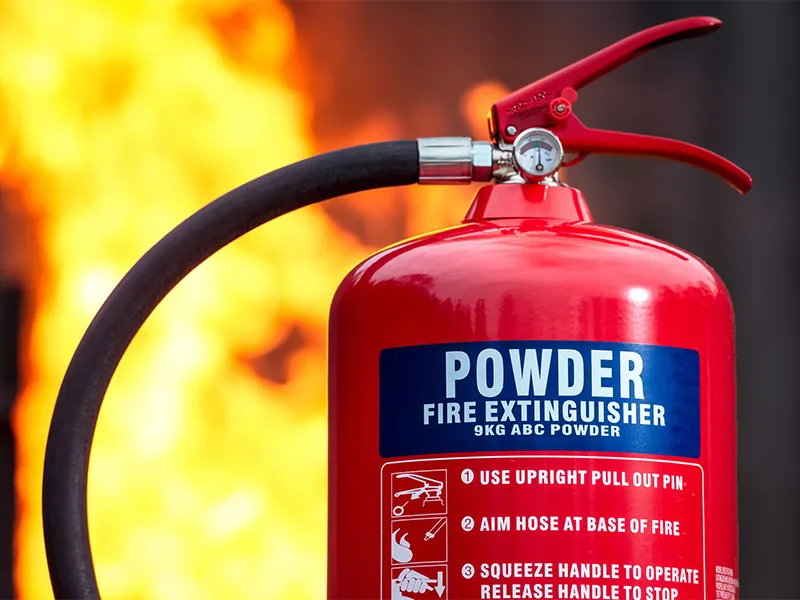
A portable dry powder fire extinguisher is composed of several main components that work together to store, pressurize, and deliver the extinguishing agent. The cylinder is the pressure vessel that contains the powder and the propellant gas. The dry powder is the extinguishing agent itself, a mixture of monoammonium phosphate and other chemicals. The valve assembly controls the release of the powder and includes the handle, the lever, and the safety pin. The siphon tube extends from the valve to the bottom of the cylinder, allowing the powder to be drawn from the bottom when the extinguisher is upright. The discharge hose and nozzle direct the powder toward the fire. The pressure gauge indicates whether the extinguisher is properly pressurized. The safety pin prevents accidental discharge. The table below summarizes these components and their functions.
| Component | Function | Typical Material |
| Cylinder | Contains powder and propellant under pressure | Steel, aluminum |
| Dry Powder | Extinguishing agent | Monoammonium phosphate, ABC powder |
| Valve Assembly | Controls discharge | Brass, aluminum, stainless steel |
| Siphon Tube | Draws powder from bottom of cylinder | Plastic, aluminum |
| Discharge Hose and Nozzle | Directs powder to fire | Rubber, plastic, metal |
| Pressure Gauge | Indicates pressure status | Brass, plastic |
| Safety Pin | Prevents accidental discharge | Steel, plastic |
At Fuxeon Fire-Fighting Technology Co.,Ltd., our factory manufactures portable dry powder fire extinguishers with high-quality components that meet international standards. We understand that each component contributes to the reliability of the extinguisher. Our goal is to provide our customers with extinguishers that perform reliably when they are needed.
2. Why Does the Cylinder Material and Construction Matter?
The cylinder is the most visible and most critical component of a portable dry powder fire extinguisher. It is the pressure vessel that contains the powder and the propellant gas, and it must withstand the internal pressure without leaking or rupturing. The material and construction of the cylinder determine its strength, its weight, and its corrosion resistance. Steel cylinders are strong and durable but heavier. Aluminum cylinders are lighter but may be more susceptible to corrosion if not properly coated. The cylinder is typically manufactured by deep drawing or welding, and it is tested to a specified burst pressure. The table below compares the properties of steel and aluminum cylinders.
| Property | Steel Cylinder | Aluminum Cylinder |
| Strength | High | Moderate |
| Weight | Heavy | Light |
| Corrosion Resistance | Requires coating | Good with anodizing |
| Cost | Lower | Higher |
| Typical Application | Industrial, commercial | Residential, vehicle |
At our factory, we manufacture cylinders from high-quality steel and aluminum, and we test every cylinder to verify its pressure integrity. We coat the cylinders with a durable paint or powder coating to resist corrosion. Our goal is to provide our customers with cylinders that are strong, safe, and durable.
3. What Role Does the Dry Powder Play in Extinguishing Fires?
The dry powder is the extinguishing agent in a dry powder fire extinguisher. It is a mixture of finely divided chemicals, typically monoammonium phosphate for ABC-rated extinguishers. When the powder is discharged onto a fire, it melts and decomposes, absorbing heat and releasing water vapor and other compounds that smother the flame. It also interrupts the chemical chain reaction of combustion, which is why it is effective on Class A, B, and C fires. The particle size, the composition, and the moisture content of the powder determine its flowability and its extinguishing effectiveness. The table below summarizes the key properties of dry powder.
| Property | Specification | Importance |
| Composition | Monoammonium phosphate, ABC powder | Determines fire rating and effectiveness |
| Particle Size | 10 - 50 microns | Affects flowability and coverage |
| Moisture Content | < 0.5% | Prevents caking and clumping |
| Flowability | Free-flowing | Ensures consistent discharge |
| Shelf Life | 5 - 10 years | Depends on storage conditions |
At Fuxeon Fire-Fighting Technology Co.,Ltd., our factory uses high-quality dry powder from certified suppliers. We test the powder for composition, particle size, moisture content, and flowability. Our goal is to provide our customers with extinguishers that deliver effective fire suppression.
4. How Does the Valve Assembly Control the Discharge?
The valve assembly is the control mechanism of the portable dry powder fire extinguisher. It includes the handle, the lever, the safety pin, the pressure gauge, and the internal valve mechanism. When the user pulls the safety pin and squeezes the lever, the valve opens and allows the pressurized gas to flow through the siphon tube and carry the powder out through the hose and nozzle. The valve assembly must be reliable, easy to operate, and resistant to corrosion. It is typically made from brass, aluminum, or stainless steel. The table below summarizes the key components of the valve assembly.
| Component | Function | Material |
| Handle and Lever | User interface for operation | Steel, plastic |
| Safety Pin | Prevents accidental discharge | Steel, plastic |
| Valve Body | Houses the internal valve mechanism | Brass, aluminum |
| Pressure Gauge | Indicates pressure status | Brass, plastic |
| Discharge Outlet | Connects to hose or nozzle | Brass, aluminum |
At our factory, we manufacture valve assemblies from high-quality materials and test them for leak-tightness and operating force. We ensure that the safety pin is easy to remove and that the lever operates smoothly. Our goal is to provide our customers with extinguishers that are easy to use and reliable in an emergency.
5. What Safety Devices Are Built Into the Extinguisher?
Portable dry powder fire extinguishers include several safety devices that protect the user and prevent accidental discharge. The safety pin is the primary safety device; it must be pulled before the lever can be squeezed. The pressure gauge indicates whether the extinguisher is properly pressurized; if the needle is in the red zone, the extinguisher should not be used. Some extinguishers include a pressure relief valve that opens if the internal pressure exceeds a safe limit. The hose and nozzle are designed to be held safely during discharge. The table below summarizes these safety devices.
| Safety Device | Function | Importance |
| Safety Pin | Prevents accidental discharge | Essential |
| Pressure Gauge | Indicates readiness | Essential |
| Pressure Relief Valve | Prevents overpressure | Optional |
| Hose and Nozzle | Safe direction of discharge | Essential |
| Tamper Seal | Indicates if pin has been removed | Recommended |
At Fuxeon, our factory equips every extinguisher with a safety pin, a pressure gauge, and a tamper seal. We test the safety devices to ensure that they function correctly. Our goal is to provide our customers with extinguishers that are safe to use and easy to maintain.
6. How Do You Evaluate a Dry Powder Fire Extinguisher Supplier?
Evaluating a supplier of portable dry powder fire extinguishers requires a focus on component quality, certification, testing, and after-sales support. The supplier must use high-quality cylinders, valves, and powder. They must hold the relevant certifications, such as EN 3, UL, or local fire code approvals. They must test every extinguisher for pressure integrity and discharge performance. And they must provide after-sales support, including maintenance and recharge services. The table below summarizes the evaluation criteria.
| Evaluation Criterion | What to Look For | Why It Matters |
| Component Quality | High-quality cylinder, valve, powder | Ensures reliability and performance |
| Certification | EN 3, UL, local approvals | Ensures compliance with fire codes |
| Testing | Pressure test, discharge test | Verifies performance |
| After-Sales Support | Maintenance, recharge, spare parts | Ensures long-term operation |
| Project Experience | References from facility managers | Demonstrates capability and reliability |
At our factory, we have been producing portable dry powder fire extinguishers for over a decade. We use high-quality components and hold the relevant certifications. We test every extinguisher before shipment and provide after-sales support. We invite you to evaluate us against these criteria and to consider us as your partner for Dry Powder Fire Extinguishers.
7. What Are the Key Product Parameters from Our Factory?
The following table provides the key product parameters for our portable dry powder fire extinguishers. These extinguishers are available in a range of capacities and are suitable for industrial, commercial, and residential applications. Our factory can also produce custom extinguishers to meet specific requirements.
| Parameter | Specification Range | Notes |
| Capacity | 1 kg - 12 kg | Custom sizes available |
| Fire Rating | ABC | Class A, B, C fires |
| Cylinder Material | Steel, Aluminum | Selected for weight and durability |
| Valve Material | Brass, Aluminum | Selected for corrosion resistance |
| Powder Type | Monoammonium phosphate (ABC) | Certified to EN 615 |
| Working Pressure | 15 bar | At 20°C |
| Test Pressure | 25 bar | Hydrostatic test |
| Operating Temperature | -20°C to +60°C | Standard range |
| Certification | EN 3, UL, CE | Selected for market |
| MOQ | 100 pieces | Negotiable for large orders |
| Lead Time | 2 - 4 weeks | Depends on quantity and customization |
At our factory, we manufacture our portable dry powder fire extinguishers to meet these specifications and more. We can customize the capacity, cylinder material, valve material, and certification to suit your specific requirements. Our quality control system includes inspection of raw materials, in-process inspection, and final inspection before shipment. Our goal is to provide our customers with high-quality Dry Powder Fire Extinguishers that meet their fire safety needs.
8. Frequently Asked Questions (FAQ)
Question 1: What is the most important component of a portable dry powder fire extinguisher?
Answer: All components are important, but the cylinder and the valve assembly are the most critical. The cylinder contains the pressurized powder, and the valve assembly controls the discharge. If either component fails, the extinguisher will not work. When evaluating an extinguisher, check the cylinder for pressure integrity and the valve for smooth operation and leak-tightness.
Question 2: How often should a dry powder fire extinguisher be inspected?
Answer: A portable dry powder fire extinguisher should be visually inspected monthly, with a more detailed inspection annually. The monthly inspection should check the pressure gauge, the safety pin, the tamper seal, and the hose for damage. The annual inspection should include weighing the extinguisher to verify the powder charge and checking the valve for proper operation. Some jurisdictions require a professional inspection every 6 or 12 months.
Question 3: How long does the dry powder last in the extinguisher?
Answer: The dry powder has a shelf life of 5 to 10 years, depending on the storage conditions. It should be replaced during the extinguisher's scheduled maintenance, typically every 6 to 12 years, depending on the manufacturer's recommendations and local regulations. If the powder becomes caked or clumped, it should be replaced immediately.
Question 4: Can a dry powder extinguisher be recharged?
Answer: Yes, a portable dry powder fire extinguisher can be recharged after use or after the powder has reached the end of its shelf life. The recharge process involves emptying the cylinder, inspecting the internal components, refilling with fresh powder, and repressurizing with the propellant gas. Recharging should be performed by a qualified service technician.
Question 5: What is the difference between ABC and BC dry powder?
Answer: ABC dry powder, typically monoammonium phosphate, is effective on Class A (ordinary combustibles), Class B (flammable liquids), and Class C (electrical) fires. BC dry powder, typically sodium bicarbonate, is effective on Class B and C fires but not on Class A fires. For general-purpose use, ABC dry powder is the more versatile choice.
9. Conclusion
A portable dry powder fire extinguisher is an assembly of components that must work together to deliver the extinguishing agent under pressure. The cylinder, the dry powder, the valve assembly, the siphon tube, the hose and nozzle, the pressure gauge, and the safety pin all play a role in the reliability of the device. By understanding these components and the specifications that matter, buyers can evaluate quality, compare products, and select a supplier that meets their requirements. At Fuxeon Fire-Fighting Technology Co.,Ltd., our factory manufactures portable dry powder fire extinguishers with high-quality components that meet international standards. We test every extinguisher before shipment and provide after-sales support.
Whether you are sourcing extinguishers for a facility, a fleet, or a retail chain, we invite you to contact us to discuss your requirements. We can provide samples, technical data, and customized solutions. Our commitment to quality and customer satisfaction has made us a trusted partner for fire safety projects around the world.
Contact Fuxeon Fire-Fighting Technology Co.,Ltd. today to discuss your Dry Powder Fire Extinguisher requirements and discover how our products can meet your fire safety needs.
Related News
- Selection of dry powder fire extinguishers
- The function of a fire hose nozzle
- Applications of alarm valves
- How Does a Fire Ground Monitor Improve Emergency Response?
- Which Pressure Rating Should a Fire Strainer Meet for a Fire Protection Project?
- What Materials Should Be Considered When Choosing a Fire Strainer?
Leave me a message
News Recommendations