What Materials Should Be Considered When Choosing a Fire Strainer?
A fire strainer is a small component with a large responsibility. It sits in the water supply line of a fire protection system, upstream of the sprinkler heads, valves, or pumps, and it traps debris that could clog or damage the system. If the strainer fails, the consequences can be severe: a blocked sprinkler head may not activate during a fire, a pump may cavitate and seize, or a valve may fail to open. The material of the fire strainer determines whether it will survive in the corrosive, high-pressure environment of a fire protection system. A strainer made from the wrong material may corrode, crack, or fail under pressure, turning a critical safety component into a liability. For procurement managers and fire protection engineers, selecting the right material is one of the most important decisions in the specification process.
This guide is written for buyers who need to source fire strainers that meet the demanding requirements of fire protection systems. We will compare the most common materials—brass, bronze, stainless steel, and cast iron—and explain how each performs in terms of corrosion resistance, pressure rating, temperature tolerance, and code compliance. We will also provide a specification checklist, supplier evaluation criteria, and detailed product parameters from our factory at Fuxeon Fire-Fighting Technology Co.,Ltd. Whether you are specifying strainers for a commercial building, an industrial plant, or a municipal water supply, this guide will help you make an informed decision that ensures safety and reliability.
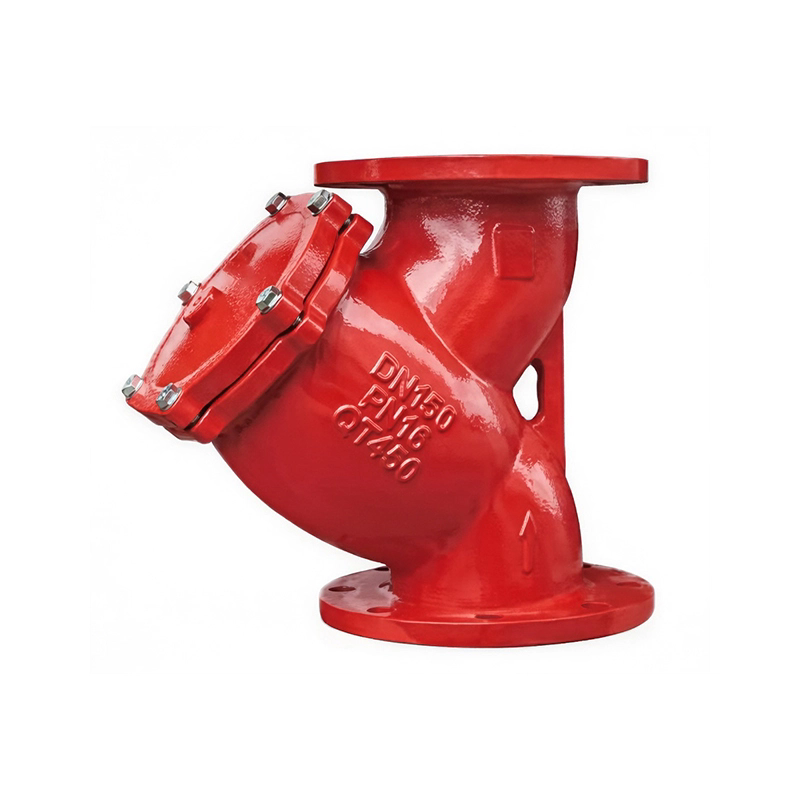
Table of Contents
- 1. Why Does Material Selection Matter for Fire Strainers?
- 2. How Do Brass and Bronze Compare for Fire Strainer Applications?
- 3. Why Is Stainless Steel the Preferred Choice for Aggressive Water?
- 4. When Is Cast Iron Acceptable and When Should It Be Avoided?
- 5. What Specifications Should Buyers Include in a Purchase Order?
- 6. How Do You Evaluate a Fire Strainer Supplier?
- 7. What Are the Key Product Parameters from Our Factory?
- 8. Frequently Asked Questions (FAQ)
- 9. Conclusion
1. Why Does Material Selection Matter for Fire Strainers?
A fire strainer is exposed to the same water as the rest of the fire protection system, but it has a unique vulnerability: its fine mesh or perforated screen is thin and easily damaged by corrosion. The strainer must also withstand the system's operating pressure, which can be as high as 12 bar or more, and the temperature of the water, which may rise in certain applications. The material must be compatible with the water chemistry, which can vary widely from one location to another. The most common failure modes for fire strainers are corrosion of the mesh, cracking of the body, and deformation under pressure. The table below summarizes the material properties that affect these failure modes.
| Material Property | Effect on Fire Strainer Performance |
| Corrosion Resistance | Prevents mesh degradation and body corrosion |
| Pressure Rating | Ensures the body and mesh can withstand system pressure |
| Temperature Tolerance | Prevents deformation or failure at elevated water temperatures |
| Mechanical Strength | Resists deformation during installation and operation |
| Code Compliance | Meets the requirements of local fire codes and standards |
At Fuxeon Fire-Fighting Technology Co.,Ltd., our factory manufactures Fire Strainers in a range of materials to suit different applications. We understand the critical role that material selection plays in the reliability of fire protection systems, and we work closely with our customers to ensure that the strainer they select is appropriate for their specific water chemistry and operating conditions.
2. How Do Brass and Bronze Compare for Fire Strainer Applications?
Brass and bronze are the most common materials for fire strainers in residential and light commercial applications. Both are copper alloys, but they have different compositions and different properties. Brass is an alloy of copper and zinc. It is economical, easy to machine, and offers good corrosion resistance in most potable water systems. Bronze is an alloy of copper and tin, sometimes with small amounts of other elements. It is more expensive than brass, but it offers superior corrosion resistance, especially in seawater and aggressive water conditions. For fire strainers, brass is the standard choice for indoor sprinkler systems and potable water supplies. Bronze is preferred for coastal installations, marine environments, and systems where the water chemistry is uncertain. The table below compares brass and bronze.
| Property | Brass | Bronze |
| Composition | Copper + Zinc | Copper + Tin |
| Corrosion Resistance | Good in potable water | Excellent in seawater and aggressive water |
| Pressure Rating | Up to 16 bar | Up to 20 bar |
| Cost | Lower | Higher |
| Typical Application | Indoor sprinkler systems, potable water | Coastal, marine, aggressive water |
At our factory, we manufacture brass and bronze Fire Strainers to meet the requirements of international standards. Our brass strainers are dezincification-resistant (DZR), which means they can withstand the corrosive effects of water with high chloride content. Our bronze strainers are made from high-quality tin bronze, which offers excellent resistance to seawater and aggressive chemicals. Our engineering team can advise on the best material for your specific application.
3. Why Is Stainless Steel the Preferred Choice for Aggressive Water?
Stainless steel is the preferred material for fire strainers in aggressive water conditions, including high-chloride water, industrial process water, and systems that are subject to frequent flushing or stagnation. Stainless steel offers a combination of corrosion resistance, mechanical strength, and temperature tolerance that is unmatched by copper alloys. It is available in several grades, with 304 and 316 being the most common for fire protection applications. Grade 316 contains molybdenum, which provides superior resistance to chlorides and pitting corrosion. Stainless steel strainers are typically more expensive than brass or bronze, but their longer service life and lower maintenance requirements make them the more economical choice over the life of the system. The table below compares the properties of stainless steel with brass and bronze.
| Property | Stainless Steel 304 | Stainless Steel 316 | Brass | Bronze |
| Corrosion Resistance | Good | Excellent | Good | Excellent |
| Chloride Resistance | Moderate | Excellent | Good (DZR) | Excellent |
| Pressure Rating | Up to 25 bar | Up to 25 bar | Up to 16 bar | Up to 20 bar |
| Temperature Rating | Up to 200°C | Up to 200°C | Up to 120°C | Up to 150°C |
| Cost | Moderate | High | Low | Medium |
At Fuxeon, our factory manufactures stainless steel Fire Strainers in both 304 and 316 grades. We use precision perforation and welding to ensure that the mesh is uniform and free of defects. Our stainless steel strainers are designed for the most demanding fire protection applications, including industrial plants, offshore platforms, and water supply systems with aggressive water chemistry.
4. When Is Cast Iron Acceptable and When Should It Be Avoided?
Cast iron is a traditional material for fire protection components, including strainers. It is strong, durable, and relatively inexpensive. However, cast iron has a significant drawback: it is susceptible to corrosion, especially in water with high oxygen content or low pH. In fire protection systems, corrosion of cast iron can lead to rust particles that clog the strainer and the sprinkler heads, defeating the purpose of the strainer itself. For this reason, cast iron is generally not recommended for fire strainers in potable water systems or in systems that are subject to frequent flushing or stagnation. It may be acceptable in certain industrial applications where the water is treated and monitored, or where the strainer is installed in a dry pipe system that is not normally filled with water. The table below summarizes the suitability of cast iron for different fire protection applications.
| Application | Suitability of Cast Iron | Notes |
| Potable Water Sprinkler System | Not Recommended | Corrosion risk, rust particles |
| Industrial Process Water | Conditional | Only if water is treated and monitored |
| Dry Pipe System | Acceptable | Not normally filled with water |
| Coastal/Marine | Not Recommended | High corrosion risk |
| Underground Fire Main | Conditional | Requires protective coating |
At our factory, we manufacture cast iron Fire Strainers for applications where they are appropriate, but we always recommend that our customers consider the water chemistry and the system conditions before selecting cast iron. In many cases, a brass, bronze, or stainless steel strainer will provide better performance and lower life-cycle cost.
5. What Specifications Should Buyers Include in a Purchase Order?
When purchasing Fire Strainers, the buyer should include detailed specifications in the purchase order to ensure that the product meets the required performance and quality standards. The key specifications are the body material, the screen material, the mesh size, the pressure rating, the temperature rating, the end connections, and the certification. The body material should be specified by type (e.g., brass, bronze, stainless steel 316). The screen material should be specified by type and mesh size (e.g., stainless steel 304, 40 mesh). The pressure rating should be specified in bar or psi. The temperature rating should be specified in degrees Celsius. The end connections should be specified by type and size (e.g., threaded NPT, flanged). The certification should be specified by standard (e.g., UL, FM, CE). The table below summarizes the specifications that should be included in a purchase order.
| Specification | Unit of Measure | Example |
| Body Material | Type | Stainless Steel 316 |
| Screen Material | Type and mesh | Stainless Steel 304, 40 mesh |
| Pressure Rating | bar or psi | 16 bar |
| Temperature Rating | °C | 120°C |
| End Connections | Type and size | 1" NPT threaded |
| Certification | Standard | UL, FM, CE |
| Flow Rate | L/min or GPM | 50 GPM |
At our factory, we work with our customers to ensure that all specifications are clearly defined and understood before production begins. We provide samples and technical drawings for approval. Our quality control system includes inspection of raw materials, in-process inspection, and final inspection before shipment. Our goal is to deliver Fire Strainers that meet or exceed our customers' expectations.
6. How Do You Evaluate a Fire Strainer Supplier?
Evaluating a supplier of Fire Strainers requires a focus on manufacturing capability, material certification, quality control, testing, and technical support. The supplier must have the capability to machine, assemble, and test strainers to the required specifications. The materials must be certified to the relevant standards, with mill test certificates available for traceability. The quality control system must include dimensional inspection, pressure testing, and material verification. The supplier must be able to provide product certification, such as UL, FM, or CE, as required by the application. And the supplier must provide technical support to help buyers select the right strainer for their system. The table below summarizes these evaluation criteria.
| Evaluation Criterion | What to Look For | Why It Matters |
| Manufacturing Capability | CNC machining, welding, assembly equipment | Ensures product quality and consistency |
| Material Certification | Mill test certificates, material traceability | Ensures the material meets specifications |
| Quality Control | ISO 9001, pressure testing, dimensional inspection | Ensures consistent product quality |
| Product Certification | UL, FM, CE, or local fire code approvals | Ensures compliance with fire codes |
| Technical Support | Application engineering, product selection | Helps select the right product |
At Fuxeon Fire-Fighting Technology Co.,Ltd., our factory has been producing Fire Strainers for over a decade. We maintain mill test certificates for all raw materials, and we perform pressure testing and dimensional inspection on every unit. Our products are certified to UL, FM, and CE standards. Our technical team is available to assist with product selection and application engineering. We invite you to evaluate us against these criteria and to consider us as your partner for Fire Strainers.
7. What Are the Key Product Parameters from Our Factory?
The following table provides the key product parameters for our Fire Strainers. These strainers are designed for fire protection systems in commercial, industrial, and municipal applications. Our factory can also produce custom strainers to meet specific requirements.
| Parameter | Specification Range | Notes |
| Body Material | Brass, Bronze, Stainless Steel 304/316, Cast Iron | Selected for water chemistry |
| Screen Material | Stainless Steel 304/316 | Corrosion-resistant mesh |
| Mesh Size | 20 - 100 mesh | Selected for debris size |
| Pressure Rating | Up to 25 bar | Depends on material and size |
| Temperature Rating | Up to 200°C | Depends on material |
| End Connections | Threaded (NPT, BSP), Flanged | Selected for system design |
| Size Range | 1/2" - 6" | Custom sizes available |
| Certification | UL, FM, CE | Selected for local codes |
| MOQ | 100 pieces | Negotiable for large orders |
| Lead Time | 2 - 4 weeks | Depends on quantity and customization |
At our factory, we manufacture our Fire Strainers to meet these specifications and more. We can customize the body material, screen material, mesh size, pressure rating, and end connections to suit your specific requirements. Our quality control system includes inspection of raw materials, in-process inspection, and final inspection before shipment. Our goal is to provide our customers with high-quality Fire Strainers that meet their performance requirements.
8. Frequently Asked Questions (FAQ)
Question 1: What is the best material for a fire strainer in a coastal environment?
Answer: For coastal environments, stainless steel 316 or bronze are the best materials. Stainless steel 316 contains molybdenum, which provides excellent resistance to chlorides and pitting corrosion. Bronze is also highly resistant to seawater corrosion. Brass is not recommended for coastal environments because it is susceptible to dezincification in high-chloride water. At Fuxeon Fire-Fighting Technology Co.,Ltd., we offer both stainless steel 316 and bronze Fire Strainers for coastal applications.
Question 2: How do I choose the right mesh size for my fire strainer?
Answer: The mesh size determines the smallest particle that the strainer will capture. A finer mesh (higher number) captures smaller particles but restricts flow more. A coarser mesh (lower number) allows more flow but captures only larger particles. For most fire protection systems, a 40-mesh screen is a good balance between debris capture and flow capacity. However, the choice depends on the specific system and the water quality. Our technical team can help you select the right mesh size for your application.
Question 3: Can a fire strainer be cleaned and reused?
Answer: Yes, most fire strainers can be cleaned and reused. The strainer should be removed from the system, and the screen should be cleaned with a soft brush or by backflushing. If the screen is damaged or corroded, it should be replaced. Regular cleaning and inspection are essential to ensure that the strainer continues to function properly. Our strainers are designed for easy disassembly and cleaning.
Question 4: What is the difference between a fire strainer and a fire filter?
Answer: A fire strainer and a fire filter serve similar purposes, but they are different in construction. A strainer typically uses a perforated plate or a coarse mesh to capture larger debris. A filter typically uses a finer mesh or a filter element to capture smaller particles. Strainers are generally used upstream of pumps and valves to protect them from large debris, while filters are used to protect sprinkler heads and other fine-orifice components. The choice depends on the size of the debris that needs to be captured.
Question 5: What certifications should I look for when buying a fire strainer?
Answer: The certifications you should look for depend on your location and the applicable fire codes. In North America, UL and FM certifications are commonly required. In Europe, CE marking is required. In other regions, local fire code approvals may be required. At Fuxeon Fire-Fighting Technology Co.,Ltd., our Fire Strainers are certified to UL, FM, and CE standards. We can provide the relevant certification documents for your project.
9. Conclusion
The material of a fire strainer is not a minor detail. It determines whether the strainer will survive in the corrosive, high-pressure environment of a fire protection system and whether it will continue to protect the system from debris. Brass, bronze, stainless steel, and cast iron each have their own advantages and limitations. The right choice depends on the water chemistry, the operating conditions, and the applicable fire codes. At Fuxeon Fire-Fighting Technology Co.,Ltd., our factory has the expertise and the capability to manufacture Fire Strainers in all these materials. We work closely with our customers to select the best material for their specific application. We maintain strict quality control and provide full material traceability and product certification.
Whether you are specifying strainers for a commercial building, an industrial plant, or a municipal water supply, we invite you to contact us to discuss your requirements. We can provide samples, technical data, and customized solutions. Our commitment to quality and customer satisfaction has made us a trusted partner for fire protection professionals around the world.
Contact Fuxeon Fire-Fighting Technology Co.,Ltd. today to discuss your Fire Strainer requirements and discover how our materials can ensure the reliability and safety of your fire protection system.
Related News
- Selection of dry powder fire extinguishers
- The function of a fire hose nozzle
- Applications of alarm valves
- How Does a Fire Ground Monitor Improve Emergency Response?
- What Are the Main Components of a Portable Dry Powder Fire Extinguisher?
- Which Pressure Rating Should a Fire Strainer Meet for a Fire Protection Project?
Leave me a message


News Recommendations