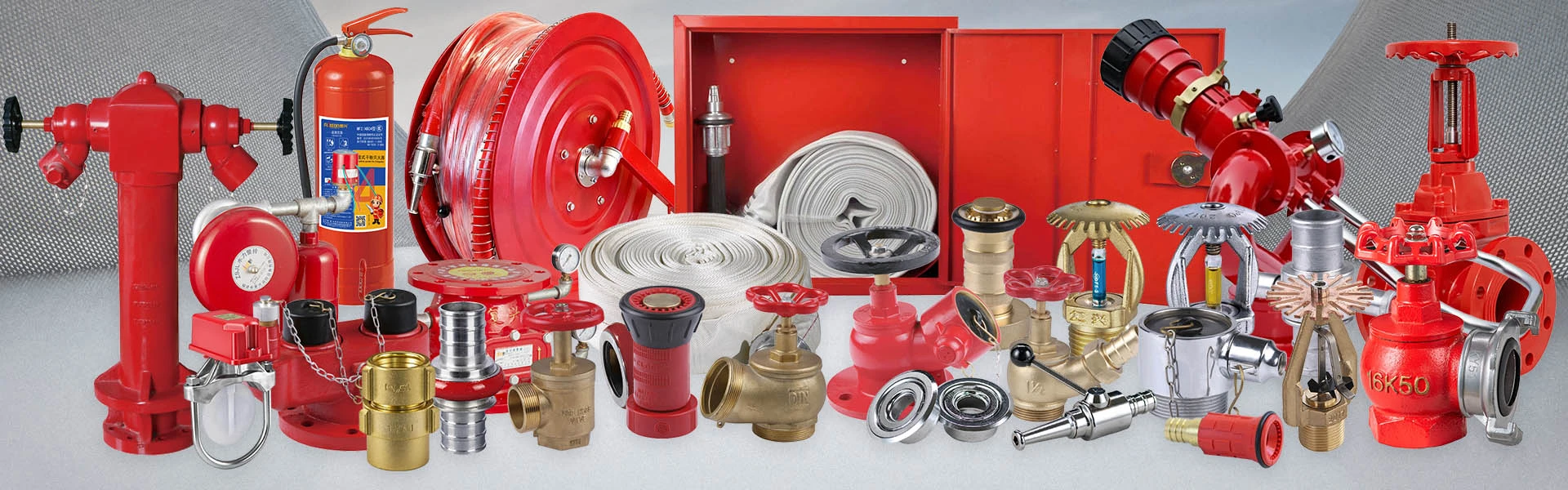
Water Curtain Sprinkler with Threaded Connection
The water curtain sprinkler with threaded connection uses a standard R1/2 male thread to join directly to the branch pipe of a drencher system. That single design decision simplifies installation: no welded spigots, no proprietary adapters, no special tools. The nozzle screws into a standard R1/2 outlet, is tightened to the correct orientation, and the system is ready for pressure testing.
The threaded connection is used across the entire FUXEON® water curtain range — single-slot and double-slot types, K values of 28, 40 and 60, tilt angles of 0° and 90°, and spray angles of 175° and 160°. A single R1/2 tapping therefore gives the designer freedom to change nozzle type later without changing the pipework.
The R1/2 Connection in Practice
R1/2 is a tapered pipe thread. When the nozzle is tightened, the threads interfere and form a metal-to-metal seal; a suitable thread sealant or PTFE tape completes the joint. Three points matter on site:
- Orientation: the nozzle must be tightened until the slot faces the intended direction. Because the thread is tapered, the final rotation stops at a fixed point — plan the branch pipe tapping so the nozzle lands in the correct orientation.
- Torque: tighten firmly but do not over-torque. Brass is ductile, but excessive force can distort the slot and change the spray pattern.
- Sealant: apply sealant to the male thread only, leaving the first one or two threads clean so that no excess enters the nozzle body and blocks the slot.
Technical Parameters
|
Model |
K Flow |
Water Curtain Tilt Angle |
Water Curtain Spray Angle |
Structural Form |
Connection Thread |
Min. Working Pressure (MPa) |
|
ZSTM A-T28/175 |
28 |
0° |
175° |
Single Slot Type |
R1/2 |
0.10 |
|
ZSTM A-T40/175 |
40 |
0° |
175° |
Single Slot Type |
R1/2 |
0.10 |
|
ZSTM B-T28/160 |
28 |
90° |
160° |
Single Slot Type |
R1/2 |
0.10 |
|
ZSTM B-T40/160 |
40 |
90° |
160° |
Single Slot Type |
R1/2 |
0.10 |
|
ZSTM B-T60/160 |
60 |
90° |
160° |
Single Slot Type |
R1/2 |
0.10 |
|
ZSTM C-T40/160 |
40 |
90° |
160° |
Double Slot Type |
R1/2 |
0.10 |
|
ZSTM C-T60/160 |
60 |
90° |
160° |
Double Slot Type |
R1/2 |
0.10 |
Installing the Threaded Sprinkler
- Confirm the branch pipe outlet is R1/2 and clean; remove debris and old sealant.
- Check the nozzle model against the drawing — slot type, K value, tilt angle and spray angle.
- Apply PTFE tape or thread sealant to the male thread, leaving the first one or two threads bare.
- Screw the nozzle in by hand until it seats, then tighten with a wrench until the slot faces the design direction.
- Do not back the nozzle off to correct orientation; if it cannot land correctly, re-tap the branch or use a different nozzle orientation.
- Pressure-test the line at the system test pressure before commissioning.
System Context
The threaded sprinkler is the final component of a drencher system that also includes control valves, detection systems, alarm systems and piping. On a fire signal, the control valve — typically a deluge alarm valve or solenoid valve — opens, the fire pump starts, and water reaches the sprinklers through the network. A water flow indicator confirms that water is moving, and isolation valves such as a gate valve or butterfly valve allow sections to be isolated for maintenance without draining the whole system.
Where Threaded Water Curtain Sprinklers Are Installed
Threaded heads are used wherever a fire drencher system is required:
- Stage openings in first-class and second-class theaters, large auditoriums and halls, and the openings connecting stage to side stage and backstage.
- Local openings where firewalls or fire-resistant partitions cannot be installed.
- The upper part of fire-resistant roller shutters or fire curtains that require protection and cooling.
In all three cases the threaded connection allows the nozzle to be replaced individually if a slot becomes blocked or damaged, without cutting and re-welding the branch pipe.
Frequently Asked Questions
Q: Is R1/2 the only thread option for this sprinkler?
A: R1/2 is the standard thread across the range. If a project uses a different branch outlet, a threaded adapter can be used, but the nozzle itself is supplied with R1/2.
Q: How do I make sure the slot ends up facing the right way?
A: Because R1/2 is a tapered thread, the nozzle stops at a predictable point. Plan the branch tapping so that the final tightened position gives the required orientation; do not loosen the nozzle to adjust it.
Q: Can I use PTFE tape on the thread?
A: Yes, and it is the usual choice. Wrap it in the direction of the thread and leave the first one or two threads bare so that no tape enters the nozzle and blocks the slot.
Q: How tight should the nozzle be?
A: Firmly hand-tight plus a partial turn with a wrench until it seats and the slot is aligned. Over-tightening can distort the brass body and alter the spray pattern.
Q: Can a threaded sprinkler be replaced without draining the system?
A: Only if the branch is isolated. Use the zone gate valve or butterfly valve to isolate the section, depressurize it, and then unscrew the nozzle. Never remove a nozzle from a live line.
Q: Does the threaded connection affect the minimum working pressure?
A: No. All models in the range have a minimum working pressure of 0.10 MPa regardless of the thread, and the design spray intensities assume 0.1 MPa at the nozzle.
Need R1/2 threaded water curtain sprinklers for an upcoming installation?
OEM / ODM available · CCCF certified · Export to 50+ countries
Related Products



Hot Products
KPA Fire Hydrant
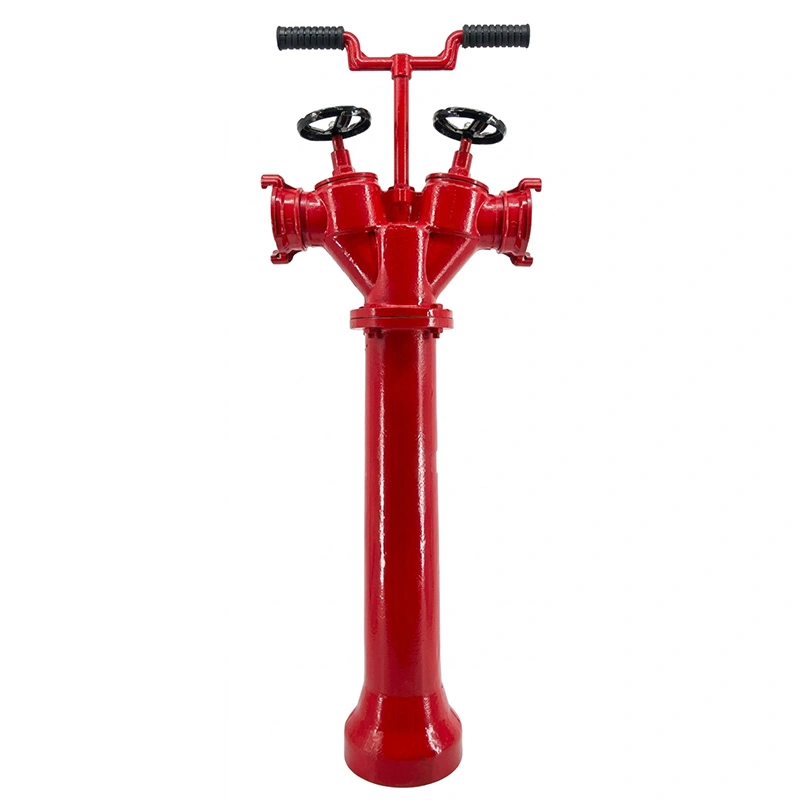
The FUXEON® KPA fire hydrant is a device that connects to underground fire hydrants. Its function is to open or close the hydrant and connect fire hoses to provide water to fire and rescue departments. This fire hydrant is suitable for temperate, cold, and tropical climates and meets the installation requirements specified in GOST 15150-69 standard.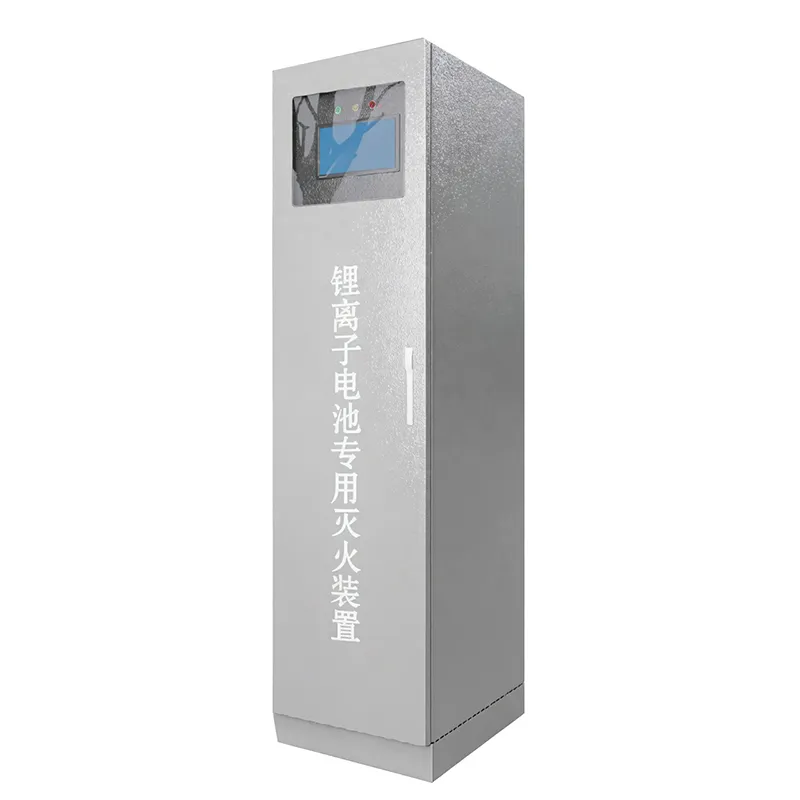
Lithium-Ion Battery Fire Extinguishing Device
Today, lithium-ion batteries are widely used in power banks, e-bikes, electric cars and other products, yet they bring serious fire safety risks. Lithium-ion battery fires are hard to put out completely and often reignite even after temporary suppression. As a professional manufacturer from China, FUXEON® has developed a dedicated lithium-ion battery fire extinguishing device, with UPA extinguishing agent as the core to effectively extinguish fires and prevent re-ignition. Backed by our modern factory, we serve as a reliable supplier of professional lithium battery fire safety solutions worldwide.
Rubber Check Valve
FUXEON® offers the Discount Rubber Check Valve, which is specifically designed for use in water supply networks and pumping stations, is an important device to ensure the stable operation of fluid systems.As a fully enclosed double-flange check valve, I can effectively prevent medium backflow, whether it is clean water transfer or sewage treatment scenarios, can be excellent, for all types of fluid engineering to provide reliable protection.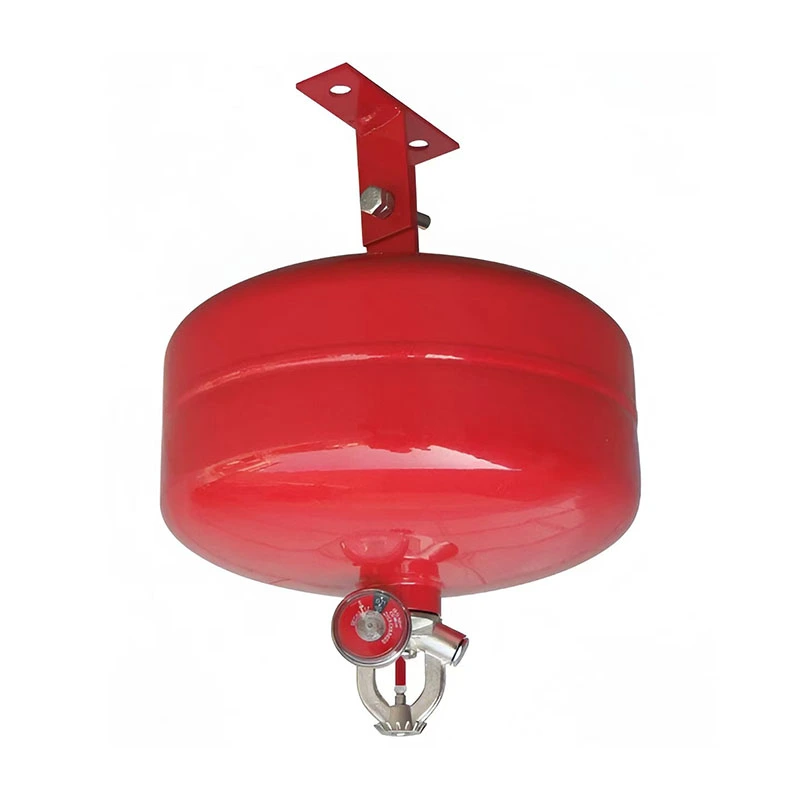
Hanged Dry Powder Fire Extinguisher
The Hanged Dry Powder Fire Extinguisher of FUXEON® is manufactured in China and is specifically designed for certain protection areas., with its core triggering mechanism revolving around a temperature-controlled glass bulb. When a fire occurs within the protected area, the spread of the fire causes the ambient temperature to rise continuously. Once the temperature reaches a preset trigger value (commonly 68℃), the temperature-controlled glass bulb on the extinguisher automatically breaks, initiating the extinguishing process.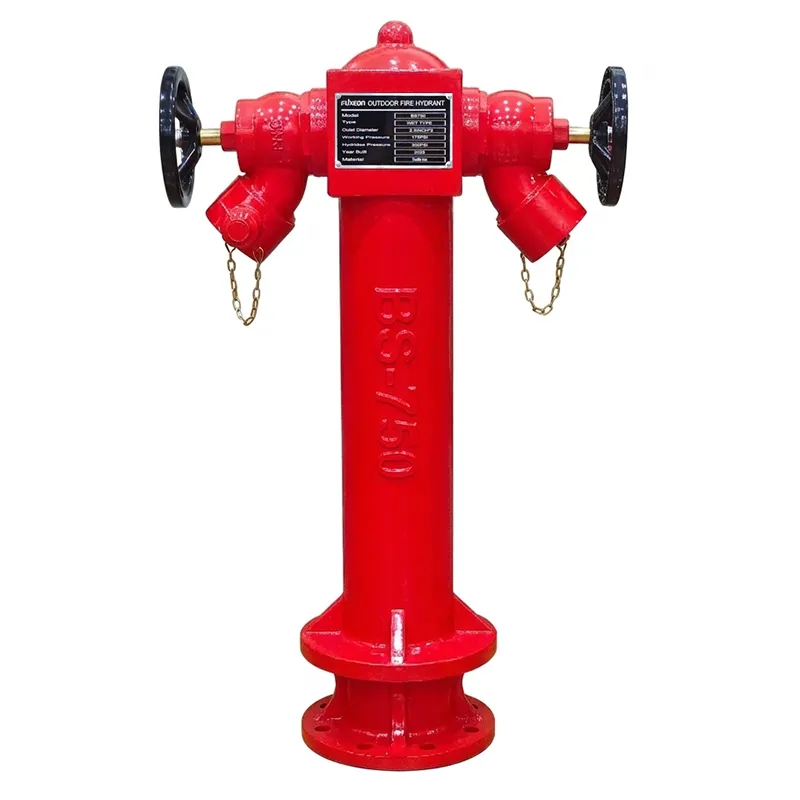
2-Way BS Fire Hydrant
As a professional manufacturer in China, FUXEON® 2-way BS fire hydrant is a high-performance wet outdoor fire hydrant conforming to BS 750 standards, a core piece of equipment in municipal and industrial fire safety systems. This fire hydrant features a ductile iron body, a 4-inch BS flange inlet, and two 2.5-inch brass outlets. It operates at 16 bar and its dual-purpose design combines flexibility and practicality. Manufactured directly in our factory, it offers excellent value for money and can be customized to meet specific needs, making us a trusted fire hydrant supplier for customers worldwide.
Manual Butterfly Valve
The FUXOEN® manual butterfly valve is a valve that controls fluid flow or cuts off fluid flow by rotating a circular valve disc. It has a simple structure, small size, light weight, and quick opening and closing, and is one of the most commonly used control valves in industrial, water supply and drainage, fire protection, heating, ventilation, and chemical pipeline systems. Our factory provides OEM services, welcome to consult us.
- Related Blog
- Reviews