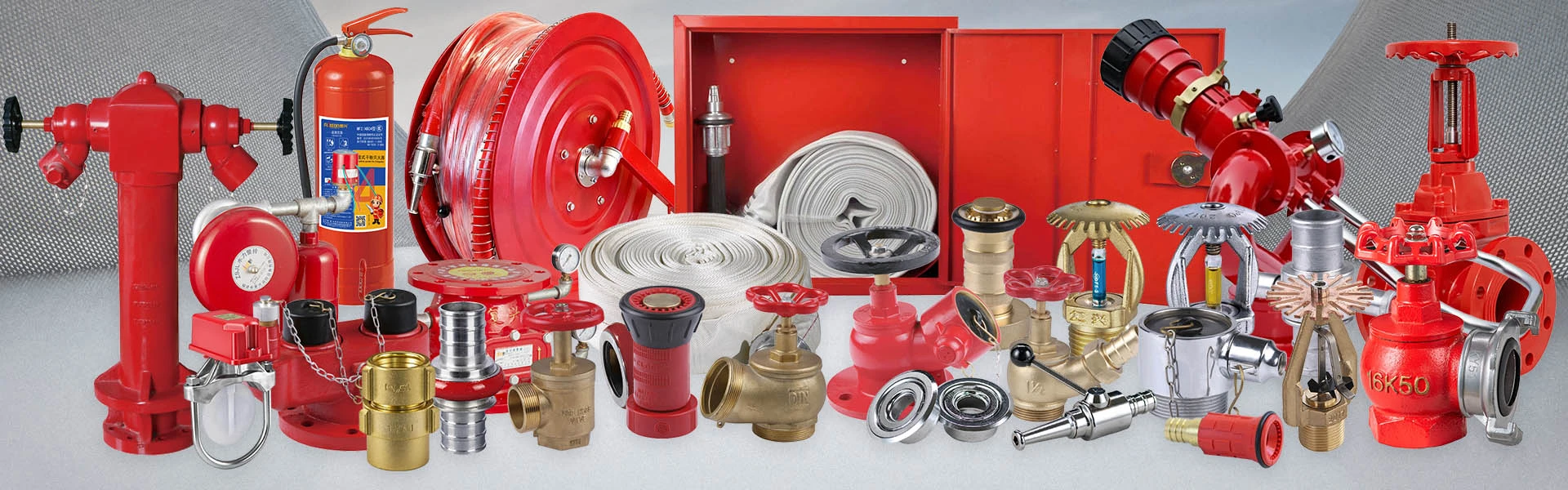
Fire Monitor for Water Discharge
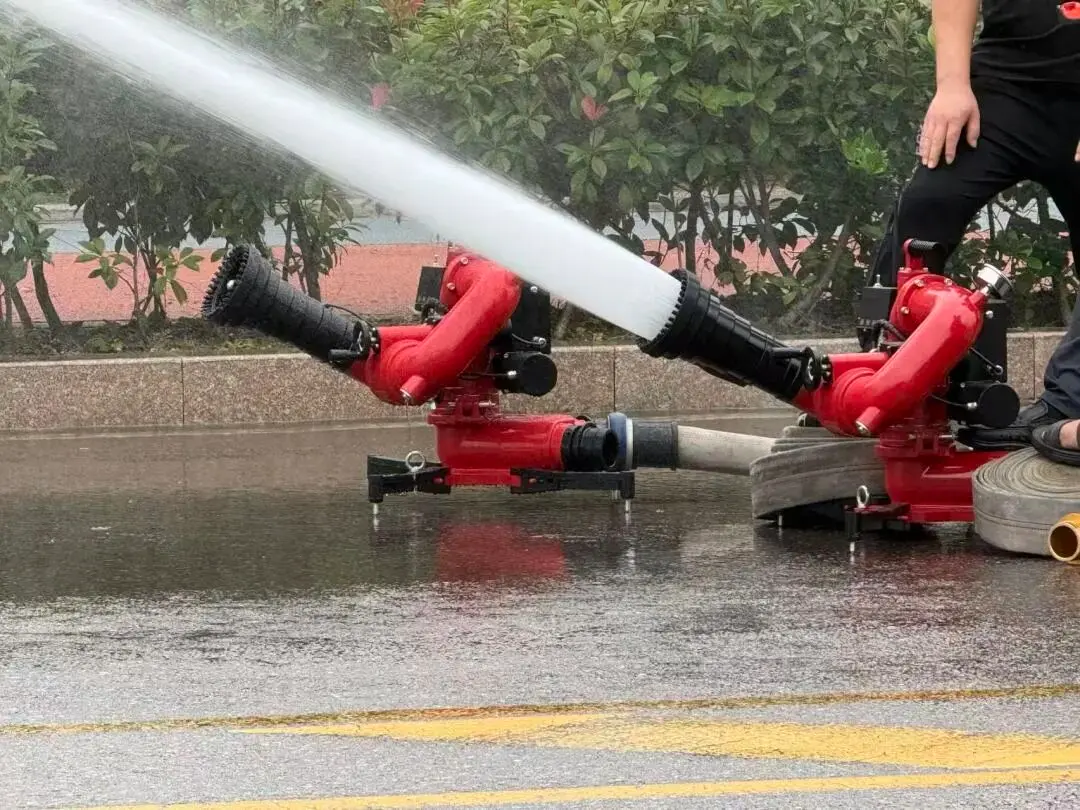
FUXEON® fire monitor for water discharge is a portable, self-supporting water cannon engineered to deliver a rated flow of 40 L/S (634 GPM) at 0.8 MPa. Built around a high-strength aluminum alloy body and a folding triple-leg base, it is designed for sustained, high-volume water discharge in oil depots, petrochemical tank farms, airports, docks and other high-risk fire scenes where a powerful and reliable water stream is essential.
Unlike fixed monitors that require permanent piping, this unit can be carried to the water discharge point, set up on uneven ground and put into service without tools. The 360° rotating base and the +30° to +70° elevation range allow the operator to direct a long-range jet or a wide spray pattern across the entire hazard zone.
Quick Specifications: Model PSY8/40WB-FX | Rated Flow 40 L/S (634 GPM) | Rated Pressure 0.8 MPa | Max Shooting Range ≥65 m | Inlet 2.5" GOST / STORZ / NH (Optional)
What Makes It a High-Flow Water Discharge Monitor
The fire monitor for water discharge is optimized around three performance goals: high flow, long throw and stable footing. The internal flow path is designed to minimize turbulence loss, so that the rated 40 L/S can be maintained across the 0.8~1.0 MPa working pressure range. A long, smooth nozzle bore converts pressure into distance, achieving a maximum shooting range of ≥65 m.
Stability is equally important for water discharge. Under full flow, the reaction force on the monitor is substantial. The folding triple-leg base spreads that load across three contact points, and each leg ends in anti-slip tungsten carbide studs that bite into soil, gravel or concrete. Internal spring-loaded shock absorbers inside each leg automatically compensate for uneven surfaces and cushion recoil, so the jet stays on target during sustained discharge.
Technical Parameters
|
Item \ Model |
PSY8/40WB-FX |
|
Rated Working Pressure (MPa) |
0.8 |
|
Working Pressure Range (MPa) |
0.8~1.0 |
|
Rated Flow Rate (L/S) |
40 |
|
Max. Shooting Range (≥M) |
65 |
|
Max. Fog / Spray Angle (°) |
≥90 |
|
Elevation Angle (°) |
+30~+70 |
|
Horizontal Rotation Angle (°) |
≥20 |
|
Inlet Connection |
2.5" GOST, STORZ, Instantaneous, NH, etc. (Optional) |
Jet and Spray Modes for Different Discharge Tasks
Water discharge is not a single task. In some situations the operator needs to push a concentrated stream deep into a tank fire; in others the priority is to cool a large surface or create a water curtain. The nozzle on this monitor switches between two primary modes:
|
Mode |
Pattern |
Typical Use |
|
Straight jet |
Narrow, concentrated stream |
Long-distance attack, penetrating deep-seated fire, reaching targets beyond truck-mounted monitor range |
|
Fog / spray |
Wide cone, up to ≥90° |
Surface cooling, heat shielding, vapor dispersion, large-area wetting |
Because the elevation angle can be set anywhere between +30° and +70°, the operator can trade horizontal distance for height — useful when discharging water onto elevated structures, tank tops or loading arms.
How to Set Up for Water Discharge
Extend the support legs of the fire monitor for water discharge and place it on a flat, relatively rough surface, ensuring the three spikes are as deeply embedded as possible into the ground. Secure the auxiliary safety belt to fixed equipment around the monitor. Close the monitor's valve, adjust the elevation angle to >30°, connect the water supply hose matched with a suitable fire hose coupling, and slowly open the valve until the rated jet flow rate and rated working pressure are reached. Then begin firefighting operations.
Opening the valve slowly is important. A sudden full-flow start sends a pressure surge through the hose and can shift the monitor before the legs have settled. Bringing the flow up gradually lets the studs seat into the ground and keeps the jet under control from the first second.
Where High-Volume Water Discharge Is Needed
The fire monitor for water discharge is particularly suitable for high-risk locations with toxic, harmful, flammable and explosive materials, such as oil fields, oil depots, airports, docks, large buildings, petrochemical tank areas, old urban areas that are difficult for fire trucks to access, and underground shopping malls. It is often paired with a foam bladder tank for foam-based fire suppression, and can be fed from a fire pump or a charged fire hose line.
Maintenance After a Water Discharge Operation
After each use, close the supply valve, depressurize the line and drain residual water from the monitor body and nozzle. Check the inlet screen and nozzle bore for debris, sand or scale that may have entered with the water supply. Apply grease to the rotation joint and elevation pivot so that the next deployment moves freely. Inspect the tungsten carbide studs for wear and replace any that have lost their grip. Store the monitor with the legs folded and the latches engaged.
Frequently Asked Questions
Q: Can the water discharge flow rate be adjusted?
A: Yes. The flow is controlled by the monitor's valve and by the supply pressure. Bringing the valve up gradually lets you set a partial flow for cooling tasks or the full rated 40 L/S for long-range attack.
Q: What supply pressure does the monitor need?
A: The rated working pressure is 0.8 MPa, and the monitor performs best within the 0.8~1.0 MPa range. Lower pressure will reduce both flow and shooting distance.
Q: How do I switch between straight jet and spray?
A: The nozzle is adjusted at the outlet. Rotating the nozzle sleeve transitions the pattern from a narrow stream to a wide fog cone of up to ≥90°, and back again.
Q: Will the monitor slide on a slope during full-flow discharge?
A: The anti-slip tungsten carbide studs and the spring-loaded shock absorbers are designed to hold position on rough or slightly uneven ground. On steep or smooth surfaces, always attach the auxiliary safety belt to a fixed object.
Q: How should I drain the monitor after use?
A: Close the supply valve, relieve pressure, disconnect the hose and tilt the monitor so residual water runs out of the inlet and nozzle. Leaving water inside invites corrosion and scale buildup.
Q: What size hose can be connected?
A: The standard inlet is 2.5" and is available in GOST, STORZ, Instantaneous and NH configurations. Select the coupling that matches your hose and pump outlet.
Need a factory-direct quotation for the FUXEON® fire monitor for water discharge?
OEM / ODM available · No MOQ · Ships to 50+ countries
Related Products
Hot Products

Single Jacket Fire Hose
The single jacket fire hose supplied by FUXEON® features high-pressure resistance, low-temperature resistance, corrosion resistance, and wear resistance, providing excellent service experience for various industries such as firefighting, petroleum, chemical, and agriculture. If you have specific requirements for the fire hose, welcome to contact us for customization.
Pistol Grip Fire Nozzle
The FUXEON® Pistol Grip Fire Nozzle is a professional fire-fighting terminal device developed and manufactured by a senior Chinese fire-fighting equipment manufacturer. Leveraging its lightweight materials, constant flow design, and double-layer fire-resistant water curtain, it combines convenience and safety, and is compatible with various connection methods. As a reliable fire-fighting equipment supplier, FUXEON® maintains quality control through standardized factories, providing efficient solutions for global fire-fighting and emergency scenarios. Inquiries are welcome.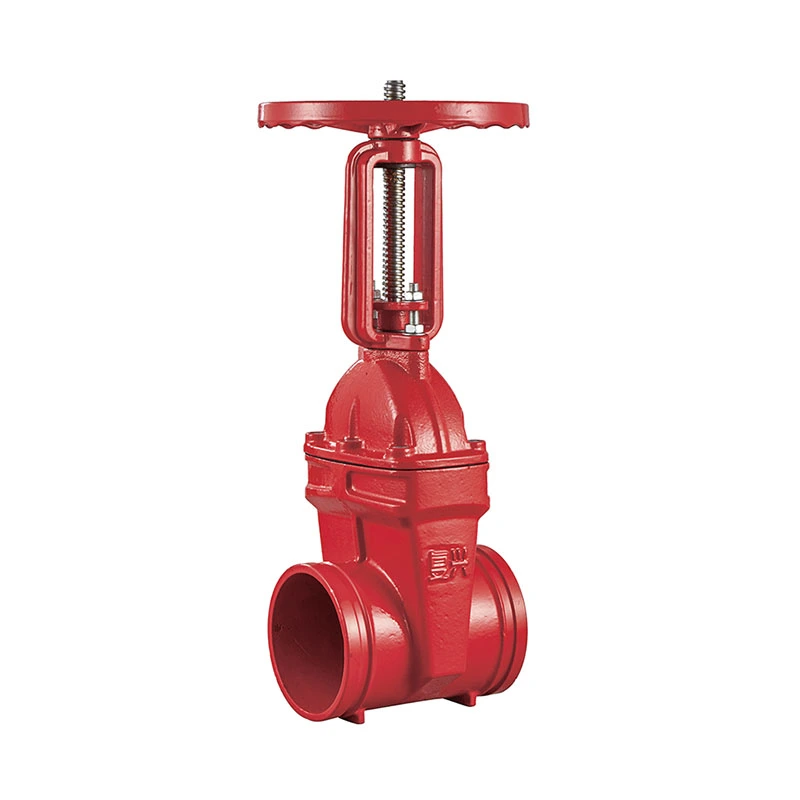
OSY Gate Valve
FUXEON®'s OSY Gate Valve is FM approved and available in sizes ranging from DN50 to DN300 (2”-12”). The valve body is primarily made of ductile iron, but stainless steel is also available. It is one of the most important components in fire protection systems. Customization is also available to meet your specific needs.
Deluge Alarm Valve
The Fuxeon® Deluge Alarm Valve is a common fire protection component that plays a vital role in deluge and water curtain systems. It's also our best-selling product. As a supplier of this product, please contact us for custom designs.
JIS Machino Coupling
The FUXEON® JIS Machino Coupling is a quick-connect component designed for connecting fire hoses, fire trucks, landing valves, fire hydrants, and nozzles. It uses an internal slider and slot-locking structure to provide a fast connection without the multiple rotations required by conventional threaded interfaces.
Signal Gate Valve
FUXEON® Signal Gate Valve is a highly reliable resilient-seated valve available in various models. Thanks to its scientific design, premium materials, and triple-safety sealing system, it boasts excellent sealing, corrosion resistance, and durability. As a professional manufacturer, we provide high-performance products to global customers, widely used in fire protection, water supply and drainage, and petrochemical pipelines. As a trusted Chinese supplier, we have earned global recognition.
- Related Blog
- Reviews